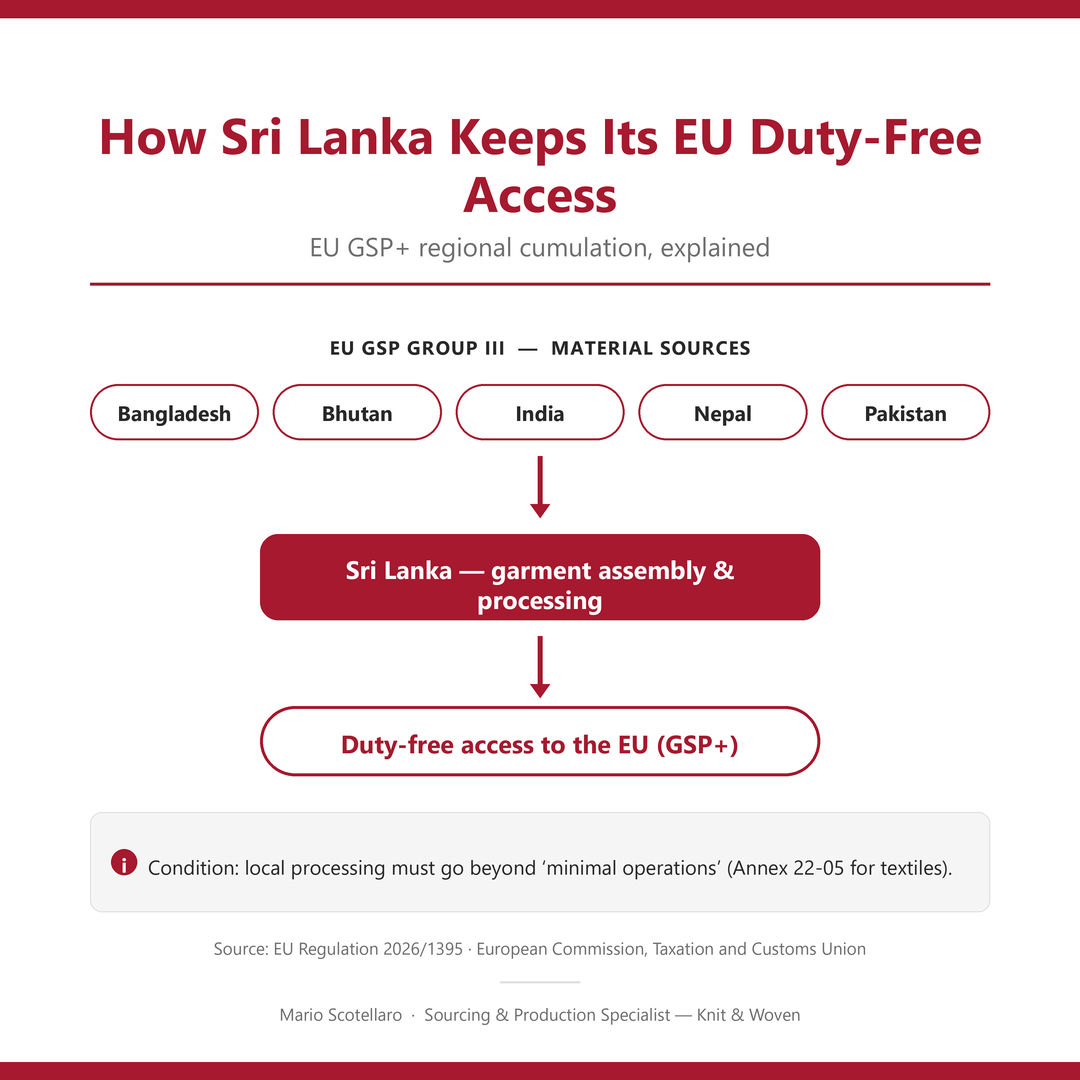
How Sri Lanka keeps its EU duty-free access
Sri Lanka's apparel sector is being told to get ready for a shift most buyers outside the region aren't tracking.
The EU's new GSP regulation (2026/1395, published in the Official Journal on 22 June, in force from January 2027) replaces the 2012 framework and raises the bar for GSP+ compliance — from 27 to 32 monitored conventions. Sri Lankan industry groups are already flagging the reforms needed on labour standards, governance and traceability before the transition.
One detail that surprises most people I talk to: Sri Lanka's GSP+ duty-free access doesn't require the fabric to be Sri Lankan. Under the EU's regional cumulation rules, Sri Lanka sits in "Group III" together with Bangladesh, Bhutan, India, Nepal and Pakistan — yarn or fabric sourced from any of those countries counts as originating, as long as the processing done in Sri Lanka goes beyond minimal operations. A garment cut and sewn in Colombo from Indian or Pakistani fabric can still ship duty-free into the EU.
For a brand comparing FOB across South Asia, that's not a footnote — it means regional sourcing flexibility doesn't have to cost you preferential access, as long as the transformation step is real.
Sources: EUR-Lex, Regulation (EU) 2026/1395 · Lanka Newspapers, July 28, 2026 · European Commission, Taxation and Customs Union